
Da’Shaunae Marisa
The art of photojournalism and capturing Black life in America
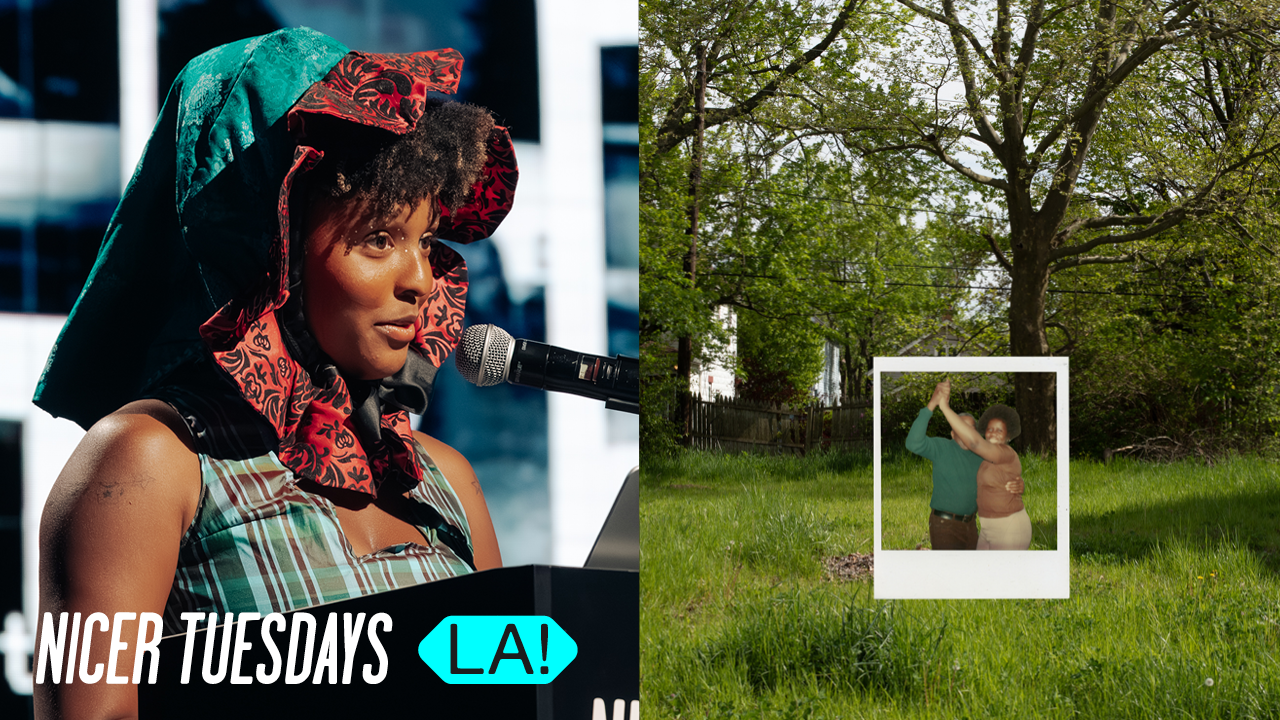
“I think that every person in this world is a flower. It is to me a metaphor for how short our lives are, how beautiful and impermanent blooming we are here and we shine and then we all go back and disintegrate back into the earth.”
Okay. Um, I come to you as a flower today and you will understand why. But my name is Da’Shaunae Marisa and I want to start with this quote by Maya Angelou which is um, people will usually forget what you say and they will probably forget what you do but they will never forget how you make them feel. So that is my intention is to always make you feel something.
This is baby me. Um, I hail from Cleveland, Ohio. Love that place. Um, my mom photographed me so much. Uh, and I was not shy to the camera. And although I could have become a model, I wanted to take control of stories. Um, and the best thing she did was give me a camera, a little codec disposable to take to school. And that gave me a voice. Um, it also allowed me to really like see the best in people, even it was just my friends and my teachers. Um, but I you missed it.
the little drawings at the end which I would sorry you missed them but I thought I was going to be an illustrator because I also liked cartoons and anime and even though that didn't work out um I went to design school and I figured that I want to just capture that feeling that I had when I was in kindergarten and first grade and follow the process of being a photographer.
So, that led me to community college. Uh, shout out my professor Dan Leven. He got us to work on our first long-term photography project. And that was born from my deep grief and frustration from not having a car in the dead of Ohio winter. Um, I got to take public transportation and that allowed me to really see the beauty and complexity of human life and human behavior. Like we all share this tiny space which was the train or the bus, but everyone wanted to stay in their own little worlds.
Um, and this was my first billboard. Not my billboard, but the first billboard that really shook me. Um, as I was taking public transportation, it Pantene hair ad, three beautiful black women, dark skin with gorgeous hair. And that was the first time that one I honestly seen a billboard like that before. I don't know if I have since then, so we should probably work on that. But um it also gave me the spark to go forward in photography because it was the first time that I really felt seen and respected by a campaign and I knew that if my work could make someone else feel like that then I was on the right path.
Fast forward, um, I got really busy with the New York Times, LA Times, Bloomberg, Vanity Fair, Vice, Vogue, you name it. Um, and I really got the opportunity to tell the beauty and other people's stories from the Midwest. There's a lot of that happens over there and it's not all good things. Um, but that also led me to the first step into public art. And what did I do?
I put black women of different shades and hair textures um in front and center in the middle of my sibly city Cleveland, Ohio. We was also featured in Vogue. and I, like I said before, I wanted to make an impact. I wanted little girls that were walking past us to see themselves and to know that there were other women that looked like them.
Thanks. Uh that was also around like the craziness of 2020 and like the death of George Floyd and so many other um beautiful black people and it started riots and they tore up downtown. Um but they did not touch my billboard and that was the first time that I knew that like my work was making an impact. Um thank you. and also just like respected by the community.
But it was also um the time where I was dealing with the rapid decline of my mom to colon cancer which sucks. Um it really sucks but it completely changed my world. it if you're a part of the I call it the DPC which is dead parent club um it is something that will change your life forever and it's something that all of us experience at some point in time um and as much as I didn't want to document that period of my life as much as I wasn't motivated to make work my mentor at the time Roy I love him um he encouraged me to document my life and it allowed me to really channel my grief in a way that just opened me up to more
vulnerability. So, while I was documenting my new world with the same Kodak disposable camera that my mother gave me, um I was making a new archive uh of my family while I was digging into my old archives of my mom, my grandparents, my great-grandparents. Um yeah and this project is very significant to me um because my family had a period of time where they weren't talking for at least 8 years and because of the diagnosis of my mom they kind of came back together. So it was completely new to me.
So in May of 2020, my mom passed away. But um after that period, I exhibited this work that I had made of my family and of all of the archives that I inherited. And people were coming up to me and they were crying. And I just realized that like even though this was a really personal story to me, it was something that a lot of other people could relate to. And I realized that others were like quietly suffering, but I was able to give them a voice.
The death of my mom was the birth of inphemeral roots uh which is simply just the honoring of an ancestor's life through adorning through flowers. I'm a flower. I think that every person in this world is a flower. And I choose to believe so because it is to me a metaphor for one how short our lives are, how beautiful and impermanent blooming we are here and we shine and then we all go back and disintegrate back into the earth. But it reminds me to at least be more kind and more gentle because we are all just as delicate physically, mentally in so many ways.
My first flower collage was my mother's flower collage after she passed away in 2020. I wanted to do something for her memorial service. So, I did this in my mom's home. No one was there, but just me and like I had time to just be in silence and create what I wanted to in that space that I felt like was honoring her in the way that I wanted. And I chose an image of her as a child because to me it still represented her innocence and like the beauty and like purity of her before being let out into the world and like having the world have its way with you and turn you into whatever you wouldn't expect it to turn you into when
you're a child and you're dreaming and expecting all these wonderful things to happen in your life. So that led me to figure out like what other images are out there. Um my archive has grown immensely because I just walk into vintage shops and I will collect as many photos that I see and I'm often like surprised by what I find.
Um there's a lot of beauty and joy in these forgotten images. is I feel like a treasure hunter. Um but it it saddens me that all of them are just like left to collect dust. Um so I really go for the images that make me feel whether that is positive or negative. And there's a lot of joy, but sometimes I also find uncomfortability and isolation depending on the time period.
And many, many hours later, um, it turns into this. Anyone that came before me was a person of color is my ancestor. I may not know exactly how I'm connected to them because of misinformation or no information at all, but whether we grew up in the same side of the world or our families were sold to the same person or whatever, there's there's always a through line that connects us that I don't know and just anyone that came before me. Yep. Okay. Um, this is a project that I collaborated with by an LA jeweler, Maggie Simkins. And so, whenever I experience another creative or artist who has also lost a family
member or a parent, I will offer the service of adorning their image. Um, so I worked with her to create something that she could put in a beautiful little locket that she could wear on her necklace um, every day. And that because I know so intimately and um, how that feels like that's always something that I'm willing to offer to other artists and just other people in general.
that has also led me to this project that is called improper frames. It is the birth of a couple things which is quite interesting. So I take all of those archives that I find in stores. Um, some of them have addresses on them because the person is photographed in front of their home or a business or uh there's actual writing on the back and I will go to that location where they used to live. They used to experience life and I will photograph it as it is now.
And in the case of these images in Cleveland, Ohio, a lot of that is vacant land and vacant lots. Cleveland has like over 30,000 plus lots of just like empty land, but most of them were um homes and businesses to people of color that no longer stand there. Um, so I see this as like a collective grief study because most of us haven't had the opportunity to have those homes or those businesses or that land be passed down through generations. Whether that is through systemic wrongdoings, red lining, uh lead poisoning, a lot of that loss is um left to us to figure out what to do with it afterwards. Um and so this is something
that is a big question in my work and like here in LA with Altadena, it leaves questions of like what is going to happen to that land? What's going to happen to communities? So even though a lot of my work dives into pretty heavy topics, I have to find ways of balancing that with joy and play and like lifegiving affirming projects. Uh in 2022, I was gifted with the Google image equity fellowship and that allowed me to make a Rubik's cube. I love Rubik's cubes. Um, it took me forever to solve one because I was jealous of the kids who could do it in 10 seconds and it took me six months. Um, but I I took the base model of a Rubik's
cube and it became a metaphor and a theme for identity and belonging. So, I put each side had a face from a family member, each with individual polaroids to make up those nine squares. Um, and it in puzzles there are not winners or losers. It's only you're just battling your own ego and endurance and like whether you can finish this thing or not. Um but it's also a case of like you holding yourself as a individual but also being connected to this unit whether that is through blood DNA or shared experiences and if there is a problem within that puzzle that unit you cannot solve it side by side. Most
people still think they can solve a Rubik's cube like that. You can't. um you have to do it layer by layer and you have to work together. So I've made this extremely difficult much more difficult. Um you know when it's just colors on a Rubik's cube there is no orientation but because I added a direction with the photos it is much more complicated and I thought I solved it and I didn't solve it. So, I tried.
Um, most of you may have seen this uh massive metal cube in Little Tokyo and synchronistically it came into my life around the same time and I was like, "Cool. Okay." My brain was like, "How can I do this?" But also, how can I make this better? Um, cuz there's a couple kinks in it, but still amazing work. the biggest fully functional Rubik's cube in America, maybe in the world. I don't know. But we have What you gonna do with the money if you Yeah.
I found the biggest fully functional Rubik's cube in America, probably the world. Um, in Michigan, one state away from Ohio. And because their engineering students made it in like 2014, it became a burden to them. and I got them to donate it to me for free. So, um I know it's great. Um so I gave it to a institute in Cleveland that does like really cool creative after school programs for kids so that they could be able to like be around something that's larger than life and like think bigger.
Um so you can guess what I'm going to do with it. I'm going to put their faces on it. So, just waiting for Polaroid or, you know, someone to message me. But either way, I will get it done. The last thing, the last project I want to share with you. You see, we're wearing the same hat. Um, goes back to grief. Me and a friend made this film.
I'm only going to show you a little clip of it. Um, I have been grieving for a while. It goes through different stages. Grief is not something that you try to squash and get rid of. It is something that you grow around and you let evolve you because it's a really beautiful journey. Um, and so I put six flowers together in a garden to talk about life and death and the legacy. And this is a bit about what they came up with.
I just want them to know and feel like I was the most genuine, authentic, honest version of myself that I could be in that very moment. and that I did my best to not let my circumstances define me or scare me or make me do things that I know morally and ethically don't feel right with my gut, but I feel like I have to in order to like make it ahead.
I really do think that it takes all of us in order to do it. But it does take being brave enough to be by yourself and really look at yourself in the mirror every single day and do that for so long that you get to the point where you're like, "Damn, I just love everything about myself even when I like fart in front of people." You know what I'm saying? Like I still am that bro.
Like, you know what I mean? Like, I still love the way that I look and I don't care what anybody says. Yeah. So, um, my mom got to see my first billboard, but you can go see my new one. It's in Hollywood and uh my mom's up there. So, go say hi to her for me. So, I hope that I got to make you feel something. If not, then you're probably a robot and stay away from me. Um, but Steve Jobs put in his Stanford speech that often times you don't recognize the patterns and the connections when you're looking forward in your life, but you will be able to see them when you look back. And yeah, thank you.
Latest Talks
-
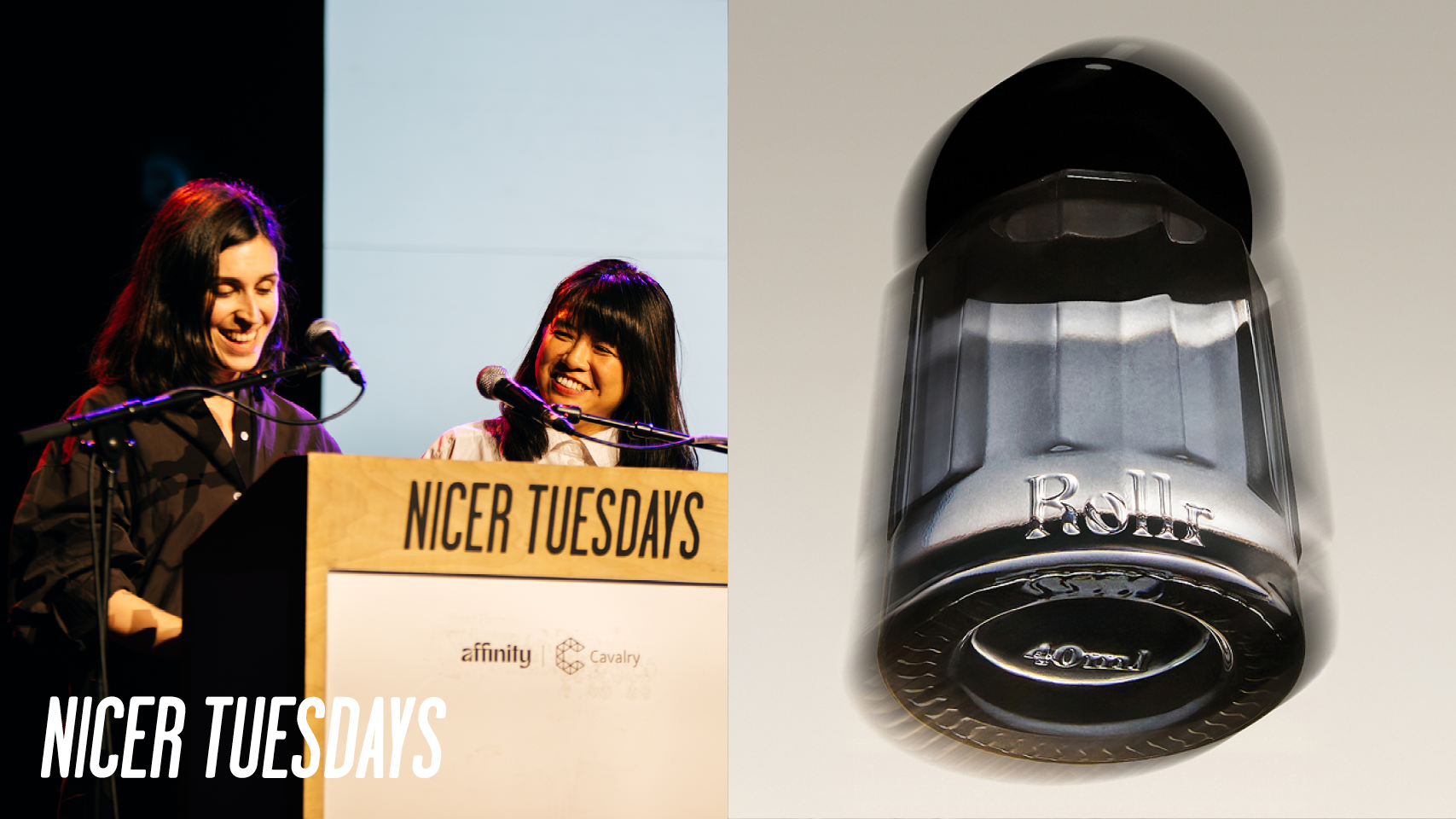
Mother Design
Mother Design on why packaging is the only thing a designer can say to the customer
Watch -
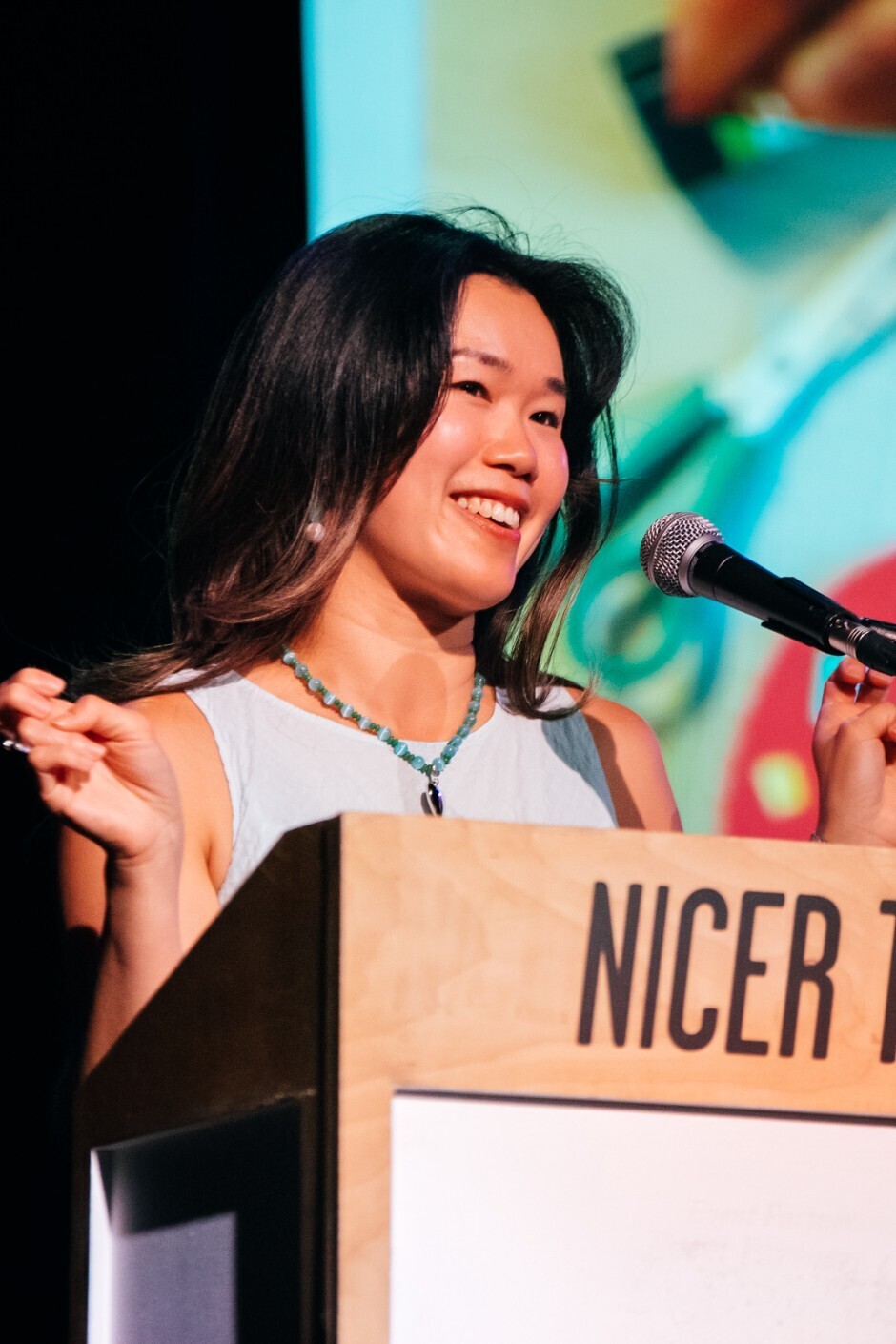
Lily Kong
How painting offers self-discovery and connection with memories
Watch -
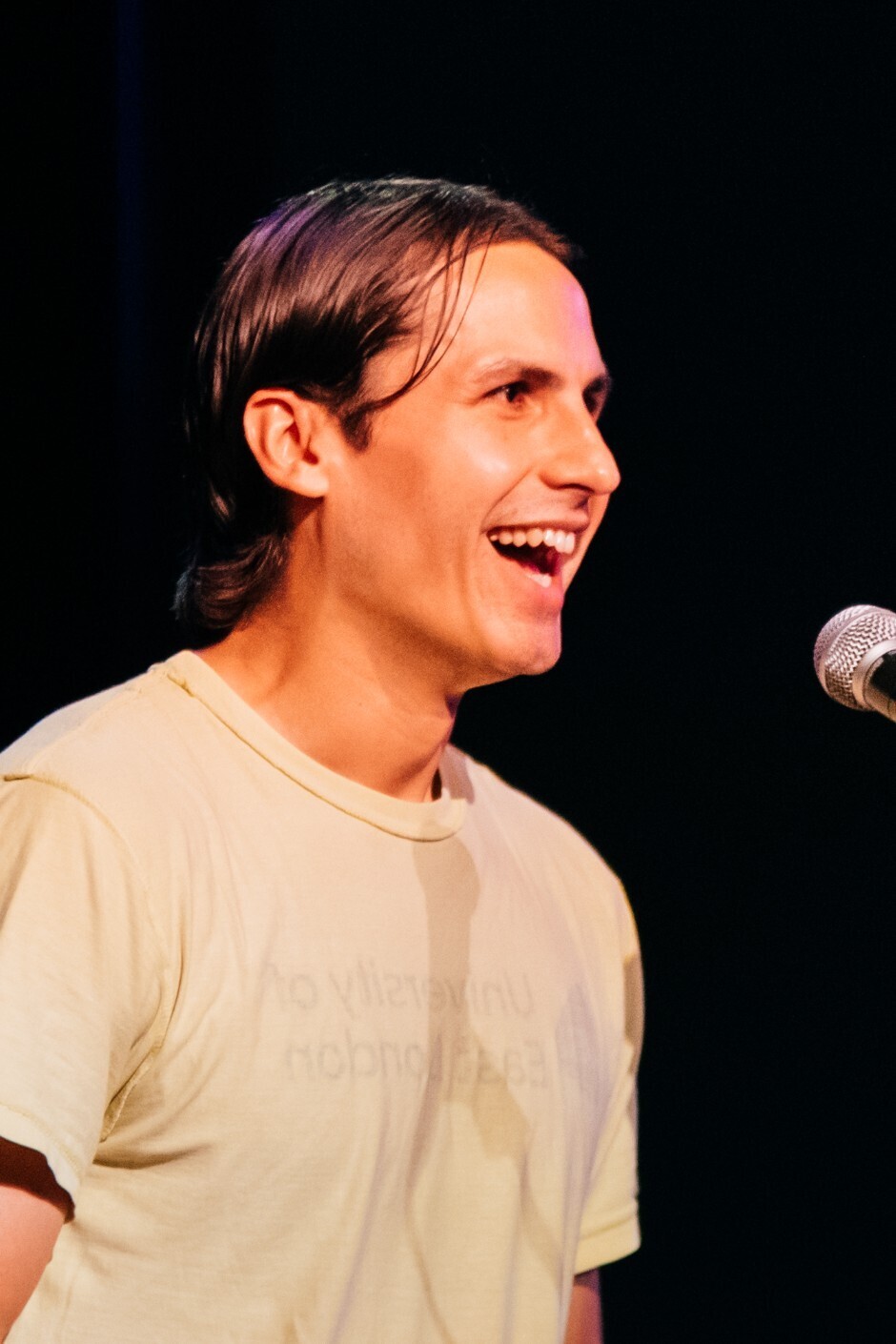
Alfie Whiteman
From professional football to photographing toe wrestling
Watch -
Jazz Grant
Using mixed media as a narrative device for dual heritages
Watch -
Daisy Chain
Reimagining Crack Magazine with slime-inspired 3D motion design
Watch -
Kelli Anderson
Tactile typography and graphic design as fine art
Watch