
Ben Sanders
How to serve your community as a local artist in a global city
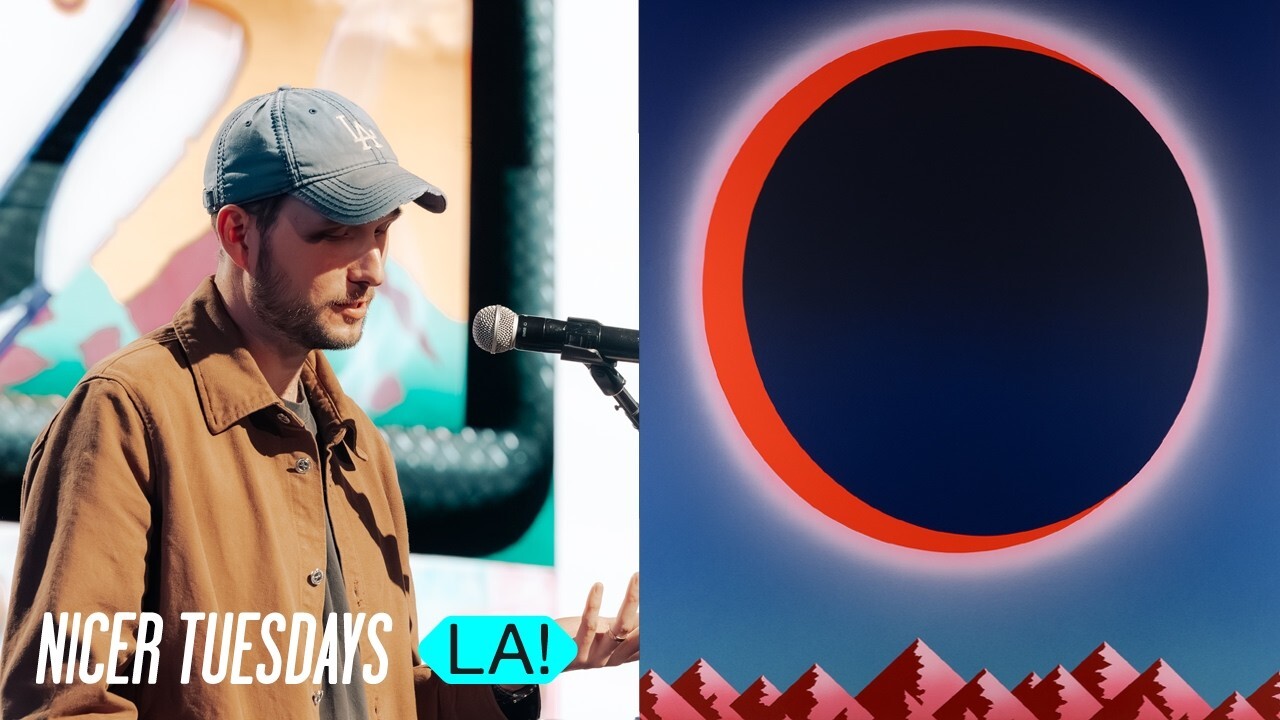
“I think that all artists should self-publish their own books. They shouldn't wait for someone to publish them. They shouldn't wait for a gallery. They should make books with their friends. You should print them yourself. You should do whatever you can to document your own work and to make yourself into a real artist and not ask anyone's permission.”
Got to lift this up a bit. How's it going? Okay, we have a lot to get through, so let's get going. My name is Ben Sanders. I'm an artist. I'm an amateur home chef at a reasonably high level. I'm a family man. I'm a gardener. and I'm a teacher. And instead of showing you some like all recent work, I'm gonna run you through the last 15 years of making art. So when I the reason I decided to be an artist is because I'm sort of intoxicated with making stuff and I just sort of decided like I have to be I have to have a life where I can make something every day basically. Okay, so here we go. So there's baby me in the studio and this
is like when I was just out of art center. I studied illustration and I was making commercial illustrations to pay the bills but then also making can you hear me? also okay thank you also making all these crazy paintings and I was really interested in using modern painting materials acrylics and water-based paint gels all kinds of additives and things that I could sort of collage um so I'd paint on glass and peel off paint strokes repaint them like basically give the paint strokes a paint job and then sort of paste them down onto a painting and the things would go off the edge and I would use shiny glossy things and sort of like developing this sort of vocabulary of
imagery based off pop and 70s minimalism and cartoons and all kinds of stuff. And then so while I'm making all these paintings, I'm also getting commissions. And this is still how I work today. So there's basically a thread through all my personal studio work that co goes through all my commission work. So, if I got a commission like say this from Bloomberg, I would just channel what I was working on already in the studio and turn it into like a digital illustration or something that would fit the bill for, you know, so I could get a check.
Um, and so that's sort of been the way that I work and I still work like that to this day. The studio is like the laboratory for things that only I'm interested in and then if somebody needs something, I basically pull from that pool of inspiration. So, so I started I started making those and I kept making more and more complicated paintings that had like bottle caps stuck to them and they were made with paper and crayon and airbrush and oil paint and acrylic paint and all these different medium and they all sort of were these crazy still lives. These ones have p This one has ping pong balls on it and this is about beer pong. It's actually about where my wife went to college. Um, but I was
using these like just ephemeral objects from thrift stores and I was even painting these little plastic vases that I would collect from thrift stores. [snorts] And over the years I just like same thing, make make work, make commercial work. Don't uh, you know, discriminate. Just make anything that anyone asks of me. Keep making things every day. And eventually I got really into the airbrush and I started making these more surreal paintings. um of these same kind of vases that also kind of turned into me and were sort of like tortured and weird, but I was still using different materials. Like the frame for this painting is made out of salt. So I had like these big blocks of
salt and I was kind of ripping them with a tile saw and building this frame. And this painting is a really big painting and the frame is made out of pool noodles. And um the background behind the weird guy is um wall like a wall a m a mural from a real place that I also built that you'll see later. Okay. So then you see this style and then someone comes along and they say, "Hey, can you make something for us?" And I say, "Okay." And um instead of doing a deliverable that's digital like a sane person, I decided that well I'm making this huge painting out of airbrush. I'll just make this whole thing out of
airbrush. So this is like an acrylic painting on panel that I photographed and then sent to Nike. And then they bought the painting, too. So it's at it's at their headquarters. I don't know if I'm supposed to say that, but um I'm sure it's fine. But uh so that that's another example of like I'm into something and I just sort of like take my own style like put on a different hat and like rip myself off. So then another project is uh my bonesai trees. So, when I um when I was at home with my um first daughter, I was like a stay-at-home dad and I worked at night and um I would draw these bonesai trees during her nap
time on uh stolen blue chip gallery stationery that I sort of got from friends that worked in the galleries and I'd sort of make them steal it from me. And um so I do bonesai in IRL and um and this is like a way to make bonesai trees really fast, which is usually a very slow art. So then I made 200 and I just kept drawing them and drawing them and drawing them with markers and then eventually um published a book of them with Amperand Gallery in Portland. And um that's the project. Uh I'm really into books. I think that all artists should self-publish their own books.
They shouldn't wait for someone to publish them. They shouldn't wait for a gallery. They should make books with their friends. You should print them yourself. You should do whatever you can to um document your own work and to make yourself into a real artist and not ask anyone's permission. Um, another project that I've been doing for over a decade are these silly pots that I just buy these terracotta pots and paint them with with acrylic paint and they started as like gifts and I would sell them on Instagram and stuff and um eventually I had all these photographs of them taken um with my good friend Josh Shadel who is a photo a very good photographer and
we made this book um Elana Schlink I don't know if anyone knows her. She's a good friend of mine. Yeah. Um she designed this book. Um and uh it has stickers in it and you can make your own pot with the stickers in the back. And um you can buy all these books by the way if you want on on my website. Um so then another thing a few years back that I learned how to do or like taught myself how to do basically lied to people and told them I could do it and then figured out how to do it were these big gradient murals. And um it's sort of the way that I funded my studio for a number of years, all through co
especially. Um I would get hired to paint these really seamless gradients. So this is in a home. It's in a big hallway and I've even like installed my own paintings in there. Um and then I started doing them for these big companies that would ask for these just big production murals. And when you work in fine art, you have to find ways to to pay for it. And um nobody really likes to talk about that. Everyone likes to pretend that they sell their work to make a living and they're all lying. Um except for like 10 people. Um and so you have to find other ways to um make money while like like the title is while still
making something every day. So this is for Nike. This was for Jordan. This was like another one of those projects where they're like, "Can you paint a basketball court?" And I was like, "Oh, you totally I totally can." And uh and then I I did it, I guess. Um and then so that sort of just to show you that sort of leads into fine artwork and studio work. So everything's like sloshing back and forth like a tide. Um and so then I made this body of work which was sort of about it's [sighs] it sounds it's heavy. It's about the global war on terror and geopolitics and the global drug trade, but it's sort of
it's sort of couched in this beautiful imagery of these um opium poppies. Um and uh yeah. Anyway, and then so uh another project I I worked on for a number of years, um this is all concurrent with the painting and the illustration and all that stuff was a project called CH um Happy Hour Agency. And it was like a collective I made with my friends Elelliana, Irene, and Connie.
And it was this space in Highland Park where we made secret speak easys. And this one was called Chateau Lloo. So we built every every bit of it. um including the cups, the um lighting, the mural, the bar itself. And it was like this year-long project where we would invite people to come and it was totally secret and you would like buy tickets and go through a kitchen and then you'd arrive in this bar and um that uh collective is no longer making bars, but I make bars myself now. Um, so I kind of call I kind of think of them as like social sculptures. So, so this is chimneys and um, whoa. Uh, so this is a series of works that are called mini bars and they're like these small sculptures. Well,
smallish. And um, I build them with my dad. My dad is a set builder. So I grew up like on movie sets. I'm a Pasadena native. Um, I never left LA. So, um, I have kind of at my disposal, um, a ready and willing fabricator who will reluctantly fabricate any crazy I think of. Um, and so I built this big chimney and then I stood in the middle of it and served drinks and there was a grand piano player and um, the wonderful Klay Hixon, who I think is here tonight, uh, the immensely talented Klay Hixon, uh, made my logo and I made shirts and hats that you can buy on my website and um, served white Russians that looked like glasses of milk and gave um, people
who were mean to me coal. And um so then this is sort of an example of like um a sculpture in a show. This is the installation and when it's ready it can come to life and become a social sculpture. Um another body of work from a few years ago were these sort of mostly airbrush acrylic paintings. And I started to think about I was doing a lot of reading about deep time and the far future and the far past and the geological record. And I just started thinking about what the world might look like in a million years when we're all gone because it's like kind of at this moment kind of a comforting thought. Um,
and so I started so I started making all these paintings of these weird forms that were maybe sentient or not. And it was really up for debate. And I framed them all in um custom aluminum frames um and that are polished like a mirror and showed them at shows and art fairs all around. Um this is when the art market was like really booming a few years ago.
Not so much anymore. Um and then I started to make them really big. So this is a show from about four or five years ago called Deep Time. And I made this like big monolithic bench that was wax steel. And we filled nine tons of lava gravel in the gallery so that when you came in it was like crunchy and wet and cold. And all these paintings are acrylic on canvas. So essentially these paintings are supposed to look like they were made by a machine maybe. Um there's no hand in them.
They're made with airbrush and lots of tape and lots of time. And each painting um has an immense amount of detail in certain areas because as a fine artist in the year of our lord 2026 I am aware that 99% of my work is being seen through a screen like this. And so I feel that if you have made the trek to some gallery in the middle of Los Angeles or New York City that to see these this work that when you look close you should be rewarded by surface quality detail something. So then this imagery eventually made it onto my bottle caps. And these bottle caps are about 3 foot in diameter and they're made out of steel. They're punched out
of steel. Um, here's a picture of them at Marta Gallery, the best gallery in Los Angeles. Go Marta. Um, and these are sort of like graphic versions of my paintings. And I sort of thought of um, again taking off the artist hat and put painter hat and putting on the designer hat and sort of reinterpreting my own work for a different context except the context is my own um, creation. Here's a picture of us making the caps. We punch them out of this uh machine called the piranha. And uh uh we can make one cap in about 20 minutes. Um so we can make a bunch in a day. And then they get painted with high gloss enamel the way you essentially the way you'd paint a car. And there's also
a book of those. Wow. And you can buy th that book at Marta. Go Marta. Uh so my studio in those years which is like three years ago maybe it looked a lot like this. It was like a factory. It was I was making work that was extremely tight. Um very very um labor intensive. Um and this is called these are called atom paintings which are these sort of atoms doing things in physical space that are shown basically they're they're color studies. Um, and so I was getting really into this technical world of making paintings. And these are all just acrylic on canvas. That's what it says like on the wall, acrylic on canvas, because that's all they are. But they're sanded and sprayed and made in a way
that makes them look like a digital print. So then again, all this time later, when I get called in from a client, I just take what I'm doing and put it on that project. So this is at the Ace Hotel in uh Palm Springs. So um the last part of my talk is so [snorts] the art market tanked. I lost my teaching job for a time and I live in Altadena. So my whole neighborhood burned down. My house is still there, thank God. But it was a very hard year 2025. And so 2025 was like this time of great reckoning in myself in why am I making art? Who am I making art for? Am I making art for art fairs for strangers to come and augle at or am I trying to
make art for the people around me, for my friends, for um my immediate community? And so it was a lot of drawing and sitting in the garden and just drawing from life, drawing from my head. Um my very good friend George Sherman allowed me to come to his studio all for the last couple years and make bonesai pots. And so since I make my own pots, I plant my trees in my pots. And so now my garden is an artwork. It's one of those social sculptures. And eventually every tree I own will be an a pot that I made and the whole garden will be one artwork. And then in the studio, I've been working on a lot of paintings on paper. um using all different materials, cheap materials,
fast materials, just sort of trying to shake things up again. Um while I didn't have my teaching job, I got a job for the last 6 months at a wine shop down the street from my house called Altadena Beverage and I started making signs. And um you know it obviously wasn't uh you know what I thought I would be doing but um it was a time when it was important to me to find some way to be creative and to keep making something every day even though my life had changed um in a way that wasn't my choice. So I ended up making like hundreds of these signs and they're all over the shop. And I think that will maybe become a book TVD probably. But then a few more just a couple more projects um this year like
this was a big one. So so this is a um a poster that I've published unfortunately since 2017. This is like the fifth edition and all the profits for it go this one went to Endelon which is a day labor organizing um organization and um I think this one sold out but I'll probably make another edition. And then this other project I just wrapped up recently is this mural which you it's kind of in a new style, but this is for a coffee shop down the street from my home. It's the first brickandmortar new business to open in Altadena since the fires. And so I was really proud to have work in it um and have the community have a place to come
together as it rebuilt. So um now I'm just in the studio. I'm making new paintings. I'm making paintings about my world, um, my family, my garden, and just trying to lean into being a local artist even though I live in a global city, and trying to think about how my what my art does in my immediate um, community. Um, and that's it. That's the end of my talk. Thank you.
Latest Talks
-
Mother Design
Mother Design on why packaging is the only thing a designer can say to the customer
Watch -
Lily Kong
How painting offers self-discovery and connection with memories
Watch -
Alfie Whiteman
From professional football to photographing toe wrestling
Watch -
Jazz Grant
Using mixed media as a narrative device for dual heritages
Watch -
Daisy Chain
Reimagining Crack Magazine with slime-inspired 3D motion design
Watch -
Kelli Anderson
Tactile typography and graphic design as fine art
Watch