
Parallel Press
Cataloguing Black mothers, Black astronauts and Black artists
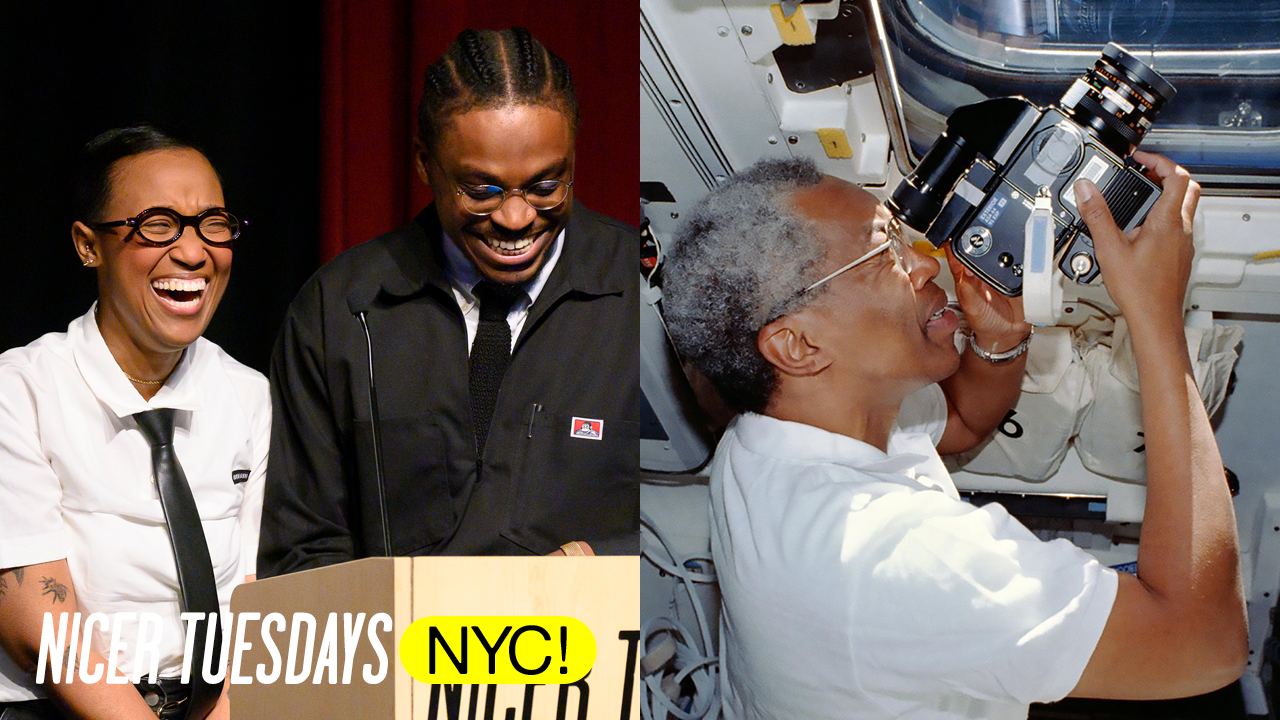
“The collective courage reminds us all that ascent begins with the same small defiant act — looking up.”
Uh this is Parallel. So, thank y'all for having us. Uh it's nice that this has been really cool to work on and kind of share with y'all. I'm just going to share a little bit about like who we are and what we do. So, Parallel Press is something that we started um for the passion of just making books and loving books. Um in that process, we had to come up with a way to make money. So we also came up with parallel work which uh helps find uh helped fund the process of making these books um through uh various means but uh it's kind of like a a cyclical thing that kind of keep working together. I started, woo, that's loud. I started working at Google a few years
before 2020. And by the time the racial justice movement reached its peak, I was working alongside a really incredible team that genuinely was committed to creating work that lasted beyond just moments. Um, one of the most significant projects for me during that period was a film collaboration with the Compton Cowboys.
Initially, oh, thank you, Renald. Initially, it began as a film project, but it quickly evolved into documentation of the peach peace march through Los Angeles that year protesting police brutality and injustice. Um, that experience for me really made clear that the most meaningful and important work I could do and would do would always be archival in the form of book.
These are a few photos that we took originally from the film, like some BTS, but um it truly like locked in for me that the the best work I could do of my life frankly would be bookmaking. And so this project is really the antithesis of publishing for me and was the road for how I met Renault. Uh how we met was uh well before we met um I worked on this book uh with my old professor Kelly Walters. um called The Black Experience in Design. Um hope you hopefully you've seen it before. Um I was approached to design this book um kind of as a way to just catalog and understand the process and the meaning behind how uh black designers are seen, but also how we work and how we create.
Uh the design was inspired by this uh concept of um not being boxed in quite literally into a category or a type of work. Um, and we spent uh about 6 months just trying to make a design system that felt like it was taking you through a journey and also kind of like understanding like how we can reframe our thinking and also how we can reframe how we're seen.
Some of that literally uh was kind of this I like this photo because um this process was really interesting. Um, we kind of went with a really rigid and utilitarian design system because we wanted to make sure that we didn't get boxed in into a specific type of graphic design. When you think of black design, sometimes you think of a certain thing and we wanted to make sure that that wasn't um, present here. But, um, in this situation, um, it also talks about the process of actually designing. In this specific example, the author gave us a really last minute um title change and I had no space uh to quite the work.
Um and so I kind of used my like frustration to inspire the designer. Um and then uh me and Aqua met. So uh back a few years ago um we met at Cash App where we both worked uh full-time. I was actually on her uh interview panel and then um in that call we had um went over by like 45 minutes talking about our love of book design. You know, we kind of joked about like, oh, should we just start studio?
It took maybe about like a year for that to actually start to happen, but eventually we started to work um together on projects. A lot of times we would get um hit up for the exact same project. Um so we started to kind of plan and uh email them together and be like, "Hey, we're a studio now." and let's see if we can get more more money out of it.
And so, uh, through that process, we were kind of thinking about, um, what do we want our studio to be about and who do we want to kind of center? Um, we both kind of had this conversation, this like deep like long conversation about um, what our moms were like when we were younger and kind of how could we like honored that um, as a way to kind of just like talk about what um, their sacrifice meant to us, but also like how we can kind of pass that baton. And we landed on um, Wilma Rudolph, who is I think the first Olympian to get three gold medals in a year in 1960. Um, and I think a quote from her that I'll read that kind of sums up a little bit of how we wanted to start working um, on books
because we wanted to make sure that we wanted to make the types of books that really wowed people, but also we didn't want to wait for a role or a phon to like hit us up to do that. Um, we figured we could just start on our own. Um, and the quote goes, "My doctor told me I would never walk again. My mother told me I would. I believe my mother."
um she had suffered uh polio um right before this um this Olympics uh in for years, but she kind of like persevered and and make sure that she kind of stayed on track. Uh pun intended. Um from there, we created our uh logo. Um this is actually a uh a type face that I created when we were both trying to uh do our type of Cooper um at the same time as our full-time jobs. Yeah. uh we we both we both dropped out.
Um but uh from this we came up with this really cool uh logo system. Um so for parallel crust and for parallel work respectively. Um so I'll just kind of take you a little bit through like the work that we did in the past couple of years. So we started in 2023 um and have made like six or so books since then. Um and so we'll kind of talk you through some of how that came together.
Uh the first book we made was a zen um inspired um and really directed by uh my partner Jordan Moss who helped uh helped us understand like that we can just start right now essentially uh we were getting ready for a book launch and our first book launch and she gave us the idea of like let's just make something for printed matter so that people can actually afford it. Um and we were inspired by this Frank Ocean song. Um, she did the illustrations and the text.
Um, we I helped with the design and the production and we kind of spent a few nights in our apartment just kind of putting the scene together with the translucent paper, a poem about, um, poetry and it's essentially a zen about love and whatever, you know. Um, uh, the next book we did, uh, we worked with Secret Reso Club in, uh, Brooklyn where we got to, um, bring to life our friend, uh, Justin Jenkins illustrations. Uh, Justin had reached out to me, um, maybe a few months after we had finished the Zen um, or with the book that we had done in 2023. And he had just coming back from a trip with uh, his wife in Japan, and he was trying to understand what it meant to be
American. and he had come to my apartment with 24 finished illustrations um of just a study in a really different uh illustration style that he hadn't really tried before. Um I told him, I think I know somebody who can help us make this. We linked up with Secret Rizo and we found um a way to kind of bring this to life through a fourcolored RO print um that they help us print and bind. We also uh took over their gallery space um for a little bit to do like a two weeks show um showcasing all that work uh where I personally framed them and um hung them with Justin. Um it was a really fun process. As uh as it turns
out with our uh process, we like to do things that are just like really hard. Um so we started with our first book of doing a book of a run of a thousand with our good friends at Lyen. um like in NYC if you haven't um if you're not familiar with them they're a design incubator and studio out in Ragewood focusing on interiors and furniture and they uh approached us to help us catalog the first five years of their studio. Um we had been friends with them for quite some time around the kind of opening of their uh shop and so we wanted to catalog their work in a way that felt really meaningful um and utilitarian as
well. um showcasing the work that was led by black and brown people um and and kind of telling a story in a very romantic setting of um what it means and how it is start um what it means to start a studio and and what it means to kind of like really codify work. And so we used their uh their address numbers to kind of be as a motif of like how they worked because they moved from like five location two five locations in five years and we kind of wanted to talk about that process of what it was to kind of keep moving essentially.
Our second book was a book we did with Julian Adon Alexander who was an illustrator who I think just talked at Miss Tuesday like times ago. um where we essentially tackled the concept of a monograph for an artist who hasn't necessarily been established yet. Um he's a young artist who does graphite illustrations. He works almost strictly in 8 1/2 by 11. Um and we were able to kind of build this 600page monograph uh of his work over the course of four years just kind of cataloging and understanding the importance of his practice of just drawing every single day. Um, and it's a beautiful like entiment just around um, persistence but also just being dedicated to a craft and being really mindful of that. So, we
wanted to bring this to life. He goes by the Instagram handle snake bone. And so, part of the design we wanted to create a literal snake. So, we did this 12-page gatefold that was really hard to get together. Uh, this book uh, quite literally almost killed me, but um, yeah. Uh I also lost my job in the process of shooting this pepperina. Um but I think it was worth it. Um and uh we got to do a talk at uh printed matter. We were also fortunate to get um uh contributions from uh the artist cause who is a a mentor of Julian and Alvin Armstrong pictured here uh where we did a talk at print matter to kind of talk about the process. in the like foreground of or on the table of in front of Alvin. You can see the book and this like really big like white brick.
It's really thick. But uh yeah, so that's a little bit about like how we kind of came to this moment here where we are introducing our new book. Um so Ronald and I are always pondering this idea which is good books should answer questions. That thinking is a big share belief of ours. We knew we wanted to make a book about space, but what questions would we be answering? What questions would we ask? For us, the answer seemed simple, which is usually famous last words for me and all, but not in this case. [laughter] Uh, so we decided we would start from the beginning. How did black astronauts come to be? We found the answers at the
black press archive within Howard University. The answer, shockingly, were laws and orders. First, beginning with Executive Order 9902 in 1941, prohibiting racial discrimination by any government agency or defense contractor. This opened the roles for wartime aviation for African-Americans, producing the highly decorated Tuskegee airmen, and placed hidden figures in black mathematicians like Dorothy Vaughn at NASA. And we we found this story really interesting because we understood that uh a thing that we kept kind of coming up with was that um DEI ended up being very very important to uh the process of how we built this country but also quite literally how we got to the moon. In
this case um Katherine Johnson uh not pictured here but uh Katherine Johnson uh is actually the person who calculated the window for the space launch uh to bring the first American to space. That was the same year that JFK uh put affirmative action into place. Um in 2024 uh this month actually uh the orange man took that away um or he at least uh repealed the executive order um the Equal Employment Opportunity Act.
And I think that in the process of designing this book, we realized that it was really important to codify and understand who these people were and how we got to this place. Um quite literally we wouldn't be in this position um with our uh NASA program and our space program without the efforts of these uh black men and women who helped us get in to uh into space quite literally. But it ends up being um a really important a really important uh thing for us to understand because even in the process of making this book and doing the two and a half uh two and a half years of research, we found that uh the NASA library uh of images and video were
actually uh shut down in the time that we were uh trying to design because the government was shut down. Um, so we had to kind of like work around those different moments, but we wanted to kind of show like the feature, like the feat that was like really important. So I just want to take you a little bit through like the actual design of the book that kind of led us to this moment actually slightly um just before we get into the design. Um, we were set to print in April and then we ended up going to the moon in April as well. So, we actually had to bring together um we had to put a stop to the printing uh so we can update the information.
So, the book uh was handbound and printed by our friend Matthew Austin in LA. And uh here's just a little sneak preview of what the book looks like. It's uh 372 pages or so. Um and essentially in this book we are uh collecting all the information the flight data and biographies that we uh wrote with our friends and contributors uh to kind of catalog this work and in beautiful photography that we got from the NASA library all public domain and we created bios and gave some detailed information about their missions, the time they spent in space, the hours um and just giving them a place to just shine. And in the first place and the first time we're actually cataloging this group of
people, but um I'll let Aqua read the last part of forward to kind of end us off. We thought we'd leave y'all with a little thing from the book. Shout out Sid for the edit. We offer this work to the black mathematicians who move decimals at Langley. The black astronauts who have spent the last 42 years collectively training 7,193 hours in space. Ron McNair and Michael P. Anderson who lost their lives to carry humanity into a new frontier. The collective courage reminds us all that ascent begins with the same small defiant act looking up.
Thank you. So thank you. Our book will be available on July 4th. Um we are making an addition of 50 and um that's all we could get. So it was a good lesson. It was a good lesson. Yeah. From a liking book. Yeah. Yeah. Yeah. So thank you again. Thank you
Latest Talks
-
Lily Kong
How painting offers self-discovery and connection with memories
Watch -
Alfie Whiteman
From professional football to photographing toe wrestling
Watch -
Jazz Grant
Using mixed media as a narrative device for dual heritages
Watch -
Daisy Chain
Reimagining Crack Magazine with slime-inspired 3D motion design
Watch -
Kelli Anderson
Tactile typography and graphic design as fine art
Watch -
Noble Signs
Restoring NYC’s storefront signage through graphic design
Watch